Sports marketing today is synonymous with success, as never before have the two been so closely linked. The sports industry has embraced the potential of marketing, with many brands increasingly using eye-catching strategies that give them an edge over their competitors.
Here we will explain what sports marketing consists of, the different types that exist, and the phenomenon of Super Bowl commercials as one of the most relevant success stories today.
History of Sports Marketing
Sports marketing originated in the United States in 1920, when the advent of radio was one of the first factors contributing to the union of advertising and sports.
Through this medium, advertisers of the time, together with sports administrators, managed to integrate sports into radio broadcasts.
Even so, it could be said that Hillerich & Bradsby (now Slugger Museum & Factory) was the pioneer in launching a marketing strategy in the sports world.
The American company decided to launch an advertising campaign in the baseball league. This move made it the leading manufacturer of baseball bats and paved the way for other companies such as Wheaties, a cereal brand that partnered with the Minneapolis baseball league with the slogan "Wheaties: the breakfast of champions." In 1923, Wilson Sporting Goods sponsored golfer Gene Sarazen, paying him $6,000 a month plus travel expenses.
Many other brands and sports sectors joined this new trend after seeing that this type of partnership could be a great business opportunity. In 1928, Coca-Cola decided to associate its brand with the Olympic Games in Amsterdam. This partnership has been one of the longest-lasting sponsorship contracts in history.
Years later, the advent of television cemented the sports sector's position as a showcase for major brands. And Phil Knight, co-founder of Nike and considered the "father" of modern sports marketing, popularized this new advertising trend, generating a huge impact on society.
Among his achievements, Michael Jordan's million-dollar contract with Nike in the 1980s stands out, a partnership that has never ceased to exist. Jordan, in addition to becoming a basketball legend, is also the prime example of how athletes can become media and advertising figures.
Without a plan, objectives cannot be achieved. Although this may seem obvious, not all industries are aware of its benefits.
The world of sports and physical activity has experienced a boom in recent years with the incorporation of new technologies and their close relationship with advertising, as has been demonstrated throughout this article with the phenomenon of Super Bowl commercials.
Relying on marketing strategies has proven to be a great opportunity to raise the profile of organizations, athletes, and clubs. So, what does it take to create a sports marketing plan?
Step-by-step sports marketing plan
This plan maintains the traditional structure, but there is one fundamental factor in sports, which is to always take into account the passion that fans have for sports. Another factor is that there are different types of marketing depending on the subject in question. For example, there is marketing for athletes, events, and products or services.
Identify needs: Determine the needs of your sports brand by comparing it with other brands available on the market.
Once the strengths, weaknesses, threats, and opportunities (SWOT) have been identified, it is time to draw up a stakeholder map, establish the target audience, and define the differentbuyer personaswho will have contact with the sports brand.
In order to create these profiles, it is necessary to take into account data such as age, gender, interests, education, etc. It is recommended to create at least three different profiles to target with the marketing plan.
In the sports industry, these actions can include: establishing partnerships with athletes, sponsoring events, email marketing campaigns, and social media campaigns.
All of them must appeal to emotion in order to link the brand with the fan base in a positive and attractive way.
For a sports marketing plan to be successful, it is also important to take care of the brand identity and ensure that it is present throughout the plan in a consistent, clear, authentic way that is aligned with the brand's values.
Benefits of implementing a sports marketing plan
Whether for a sports club, a company, or an athlete, one of the main objectives is to gain visibility and relevance. Creating a sports marketing plan helps promote the launch of a campaign or services and products.
Among its main benefits are:
- It helps increase the brand's appeal and visibility among the target audience.
- Promote distinctive aspects that improve brand positioning and differentiation from the competition.
- Significant increase in revenue, whether in sales, number of followers, etc.
- It reinforces the excitement generated by sport and the sense of belonging among fans and the club, brand, or athlete.
- Strengthen brand identity through consistency and authenticity, thereby conveying trust and credibility.
Types of sports marketing
Within the marketing plan, depending on the objectives and creativity of the team, different strategies can be incorporated:
VIRAL MARKETING, YOUR BRAND ON EVERYONE'S LIPS
Viral marketing refers to marketing that is capable of generating interest with a creative message that users share organically because they identify with it or find it clever.
Social media is necessary for a strategy to go viral. These platforms allow campaigns to be shared and disseminated, thus raising the profile of the brand behind the strategy.
Betting on a viral campaign is no easy task, as its impact is unpredictable. One of its main benefits is its low cost. The hardest part is finding a way to convey the message in a striking, transgressive, and interesting way.
Another advantage of viral marketing is the wide reach it can achieve and its rapid dissemination. As it is not such an invasive strategy, it is usually well received and has a significant impact, thus reinforcing the brand image. It is a good strategy for increasing ROI (Return on Investment) and gaining visibility.
An example of this was Joan Laporta's high-profile campaign for the presidency of FC Barcelona. With a simple banner, albeit in a very strategic location, he managed to make an impact and position his candidacy in the media and in society itself.
In addition to passersby who shared the action on social media when they saw it, Joan Laporta posted a very provocative tweet on his personal account. His action set social media ablaze and turned it into a trending topic.

Laporta's message on Twitter
Street marketing, when the street is just another extension of your campaign
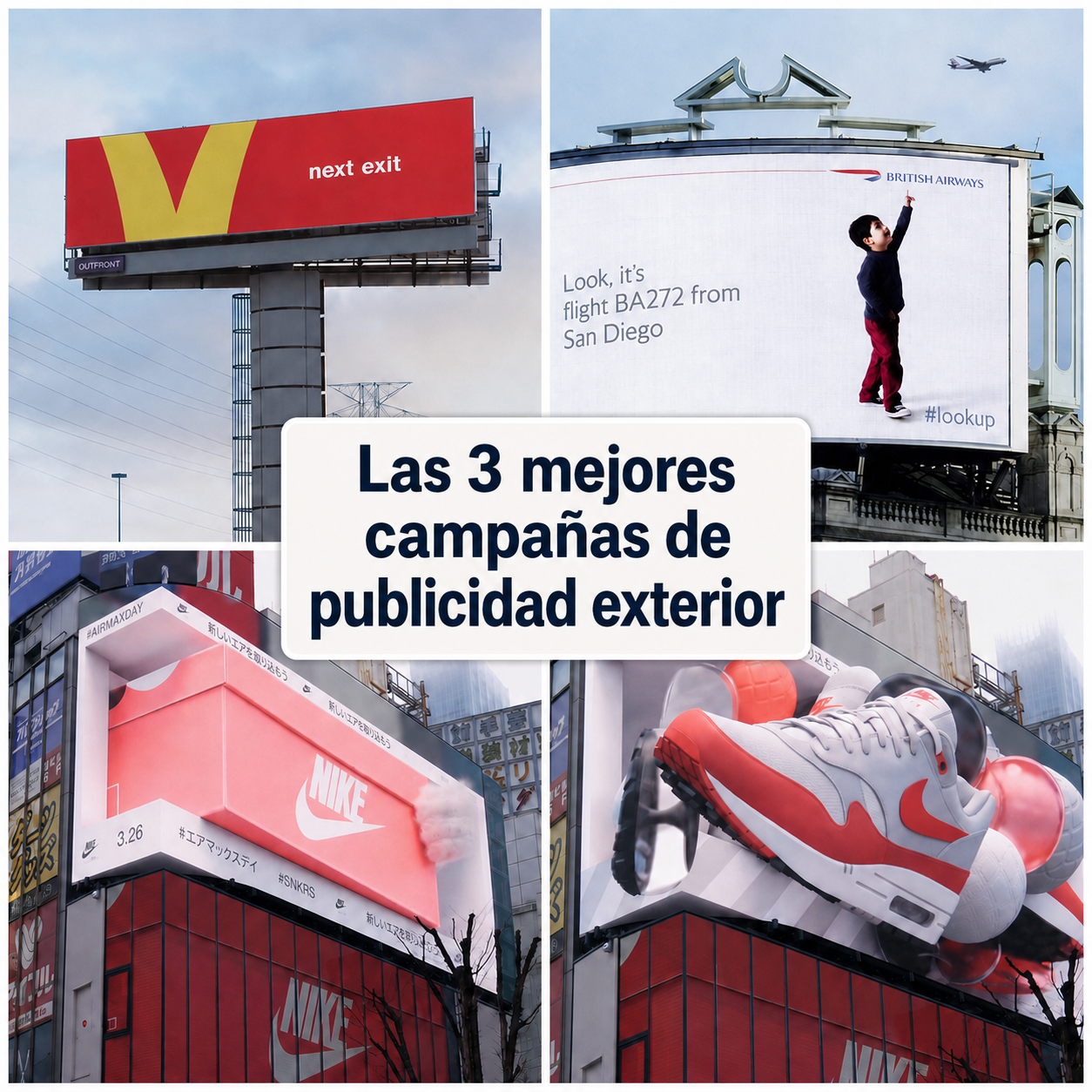
Street marketing or guerrilla marketing is one of the strategies that can have the greatest impact on consumers. We all like to be surprised, and brands know this.
Many brands have customized public transport shelters by combining sports and products. An example of this can be found in Brazil. During the World Cup, Guaraná, an energy drink brand, transformed a shelter in Sao Paolo into a goal.
Goalkeeping-Marketing
Another example of a transformed bus shelter isSony'scampaigntoannounce the launch of the Sony Bravia 3D television.
Sports Marketing
https://cnnespanol.cnn.com/2024/03/25/dani-alves-abona-11-millones-fianza-libertad-provisional-orix/
https://anunciart.com/pandora-tendra-increibles-regalos-para-las-madres-este-10-de-mayo/
Why is it important to advertise at sporting events?
For any advertiser and brand, getting everyone talking is the top priority. Massive events like the Super Bowl are the ideal setting to boost strategies, top ofmind awareness, show off, and branding.
Whether an advertising campaign is a success on that day will depend on:
- The theme addressed. People come before the brand, and it is important that campaign storytelling focuses on the consumer rather than on the image of the company itself.
- Make an impact with a product that is aesthetically well-crafted and invites reflection or evokes emotions in the viewer.
- Make campaign content shareable. Social media is becoming increasingly relevant in consumers' daily lives, and it is important to think about creating transmedia content that can go viral.
In addition to commercials, there are other resources used by major brands to advertise on that day. Many resort to ambush marketing.
This strategy is based on taking advantage of the event's popularity, without being an official sponsor, to promote the brand through non-traditional media.
In recent years, social media has played an essential role in this type of action, as brands participate in digital conversations through hashtags.
It is ideal for making content go viral and optimizingbranding.