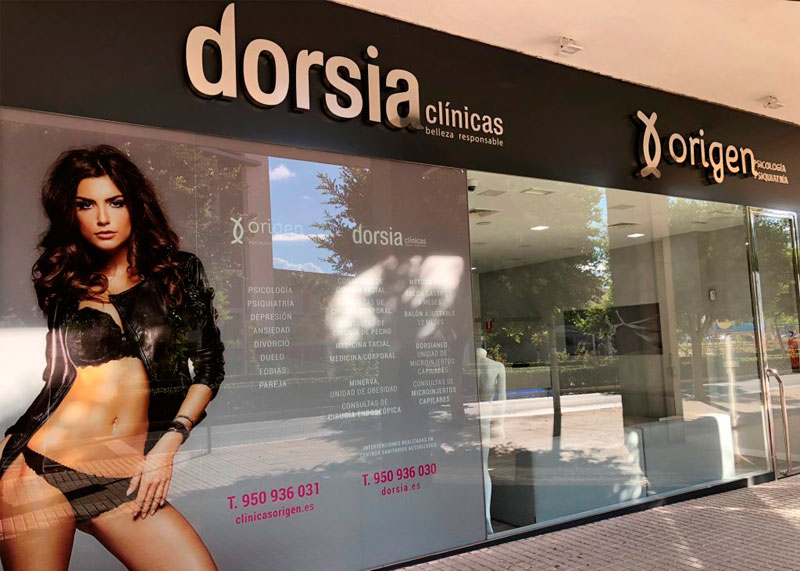
Plaza de Callao in Madrid became the epicenter of controversy stemming from a billboard displaying the phrase "Another summer changing the beach scene," accompanied by an image of a woman showing her cleavage and the price of breast augmentation using a new technique.
The company behind this initiative, Clínicas Dorsia, defends its creativity as a "powerful message about women's beauty and cosmetic treatments," RW reported on Thursday, May 9.
However, the Spanish organization Teta&Teta, an NGO dedicated to desexualizing the representation of women, raised its voice against this representation, requesting the removal of the billboard.
Controversy over breast augmentation advertising
Through its social media platforms, Teta&Teta not only criticizes the message promoted by Clínicas Dorsia's advertising, but has also urged the authorities to impose greater regulation on commercial communications of this type.
In particular, it addresses the need to protect young women and adolescents from messages that could negatively influence their perception of beauty and self-image.
The request to remove the billboard has gained traction on social media, with around 142,000 followers on Instagram alone, urging both the Ministry of Equality and Madrid City Council to take action.
In addition, they have drawn attention to statistics showing a significant increase in cosmetic breast surgery in Spain, especially among young women.
María Rufilanchas, owner and creative director of Molaría and Teta&Teta, told RW that Clínicas Dorsia's advertising is sexist and contributes to the objectification of women, calling for greater regulation in the advertising sector to prevent the perpetuation of harmful stereotypes.
Billboard increase
Of course, it's not the first or last controversy.
Controversies with advertisements on public roads
There are precedents for similar controversies.
In Argentina, in 2019, a billboard advertisement for a well-known underwear brand sparked controversy for promoting an unrealistic body image.
The campaign featured models with slim, muscular bodies, sparking criticism about promoting unattainable beauty standards and potentially contributing to eating disorders among young people.
In Brazil, in 2020, a campaign by a chain of gyms in São Paulo caused a stir by using phrases that promoted fatphobia and the "perfect" body.
The ads, which featured messages such as "Are you happy with the mirror?" and "You wouldn't be fat if you were strong," were widely condemned by human rights groups and body acceptance movements.
In Mexico, in 2021, a campaign by a weight loss product brand sparked criticism for its sensationalist approach and its promotion of extreme thinness as an ideal of beauty.
The advertisements featured retouched images of thin people with slogans suggesting that only thinness led to success and happiness, raising concerns about their impact on the mental health of the population.
According to the association, every year 80,000 women undergo breast augmentation surgery. Sixty percent of women who undergo this procedure are under 30 years of age, and more and more women are doing so. A study conducted in 2021 specified that 204,510 procedures were performed, including treatments as diverse as breast augmentation, rhinoplasty, and liposuction.
The Dorsia clinic, responsible for the campaign and banner, decided to publish a public apology on its official accounts. "The Dorsia Clinics team apologizes to anyone who may have been offended by the message on the banner," the statement said. "We are an honest and consistent company and we accept that the wording of the message may have hurt people's feelings." "We are immediately removing the message," it concluded.