BY ERICK BORGES
Artificial intelligence, or AI for short, is intelligence performed by machines. In computer science, it is an intelligent machine that perceives its environment and performs actions that maximize its chances of success in a given goal or task.
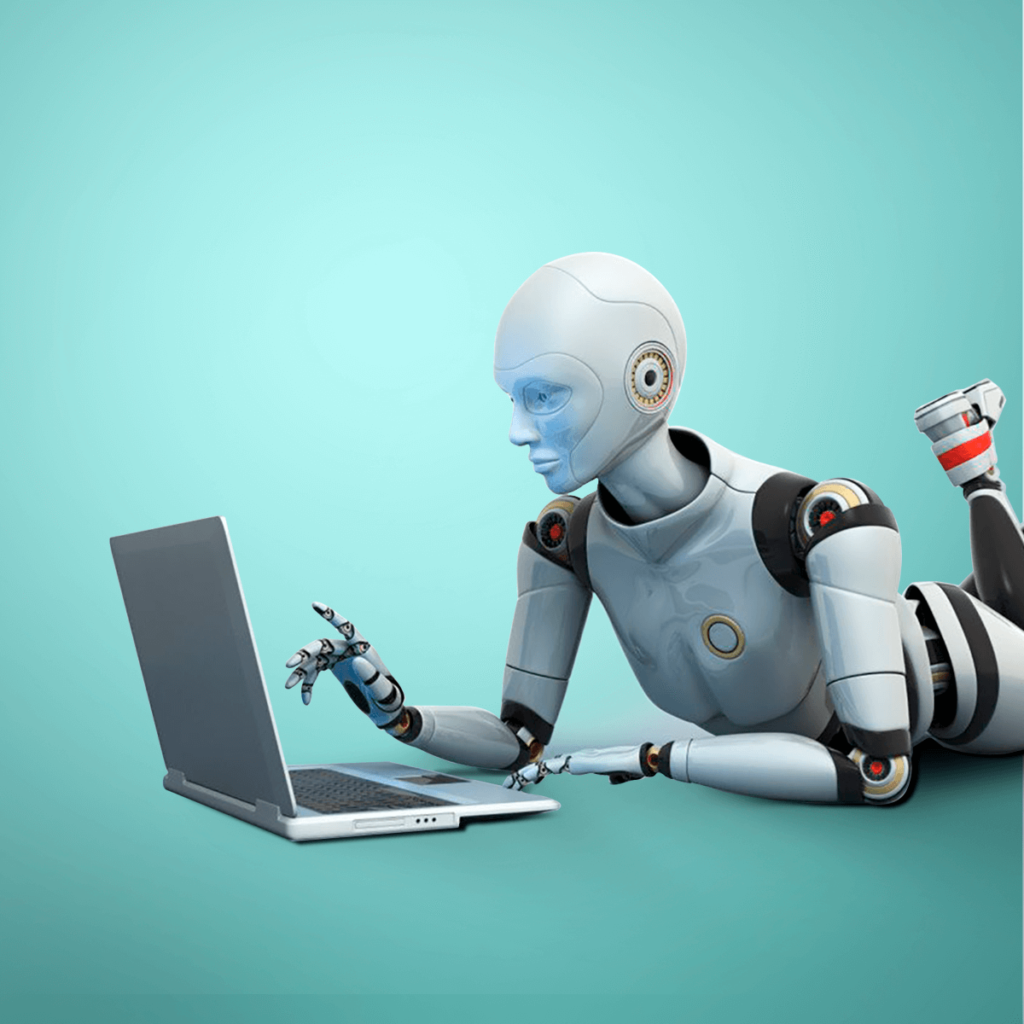
A technology that still seems distant and mysterious to us, but which has beenpresent in our daily lives around the clock for several years now.
Did you know that90% of the world's datahas been generated in the last two years? Yes: the digitization of our lives and the emergence of the internet in all areas is generating a huge amount of information.Such a quantity of data is impossible for a human to process: people have a finite capacity to define strategies and put them into action based on the information obtained.
AI Applied to Marketing
Marketers were somewhat reluctant to incorporate AI into their digital marketing strategies, and this was due to the ambiguity regarding the results it could deliver, but this has been significantly reduced. These intelligent tools are evolving a little more and are even capable of surpassing humans in certain specific areas.
AI in marketing allows you to get to know your audience, offer them what they need and are interested in, facilitates the sales process, and takes care of the most routine procedures such as informational tasks.
9 applications of AI in marketing
1. Content creation and generation
2. Content curation
3. Email marketing
4. Digital advertising
5. Search
6. Web design
7. User experience
8. Chatbots
9. Predictive analytics
One example is Sephora, which automates customer engagement with chatbots.
For major retailers, handling a high volume of consumer inquiries and feedback across multiple channels, including phone, email, and social media, can be overwhelming even for the best-equipped customer service teams.
To combat this, Sephora, a world-renowned beauty retailer, became one of the first in the retail sector to implement not one, but two chatbots on Facebook Messenger:
Sephora chatbots
Having artificial intelligence on our side will bring multiple benefits to our digital marketing strategies. AI is the new face of productivity, efficiency, and profitability. And let's be clear, these applications of artificial intelligence in digital marketing are not here to replace the jobs of marketers and advertisers, but to unleash their true strategic and creative potential.
The figures are the best proof of this: the US consulting firm Gartner predicts thatby 2020, 85% of customer interactions will be managed by AI, and overall,the AI market is estimated to be worth $127 billion by 2025,a figure well above the $2 billion recorded in 2015. The United States and China will lead the way in investment.
And although there are voices such as that of Swedish philosopherNick Bostromfrom Oxford University,who predicts that "there is a 90% chance that between 2075 and 2090 there will be machines as intelligent as humans," or that ofStephen Hawking,who ventures that machines will completely surpass humans in less than 100 years, the truth is that far from makingus obsolete, AIwill make us more efficient and allow us to perform actions that we would never have been able to do due to their complexity.
It is true that we still do not knowwhat impact artificial intelligence will have on marketingor howitwill transform the roles and functions of teams. But we will be keeping a close eye on everything that happens.
Whether to remain in the past or not is up to each individual!