Bus marketing is a form of outdoor advertising that leverages the mobility and visibility of buses to reach a wide and diverse audience. It can be applied to various parts of the bus, such as the exterior, interior, or bus stop, and can use different formats, such as posters, signage, digital displays, or audio messages. Bus marketing is effective because:
It has high reach and frequency. Buses travel on busy routes and cover a wide geographical area, exposing ads to millions of potential customers several times a day. According to a Nielsen study, bus ads can generate up to 6.5 million impressions per week in a large city.
Bus advertisements have a high impact and are memorable. They are large, colorful, and eye-catching, which sets them apart from other media.
They can also create a lasting impression by using creative and interactive elements, such as 3D shapes, extensions, or QR codes.
A survey conducted by the Outdoor Advertising Association of America (OAAA) found that 75% of consumers remembered seeing a bus ad in the last month, and 55% remembered the specific message or offer.
One of the best outdoor advertising campaigns
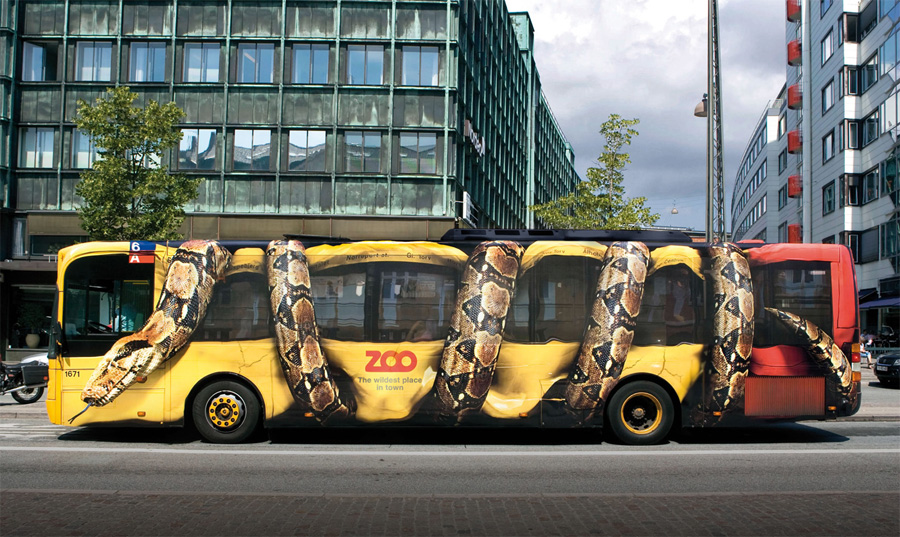
A spectacular street marketing image was created by the Bates Y&R agency to promote Copenhagen Zoo. They decorated buses with graphics of a boa constrictor, which from a distance looks as if it is squeezing the transport. This brilliant idea impresses by reinventing a medium.
This advertisement for a zoo painted on a bus must be one of the most creative advertisements ever created. At first glance, it really looks like a snake is strangling the bus, until we pay attention and realize that it is all just a masterful work of makeup on the vehicle's shell.
The image in this example is shown large on the cover.
Highly targeted and flexible, bus ads can be customized to reach specific audiences based on location, time, or demographic group along the bus route. They can also be easily changed or updated to suit different campaigns, seasons, or events.
For example, a bus advertisement for a movie premiere can show different trailers or reviews depending on the day of the week or proximity to the theater, and has a high return on investment (ROI).
Bus advertisements are relatively inexpensive compared to other media and can generate a significant increase in brand awareness, sales, or traffic.
A study by the American Public Transportation Association (APTA) found that every dollar spent on bus advertising can generate up to $6 in economic activity.
How to turn your bus into an outdoor advertising billboard?
One of the most effective ways to transform your bus into a powerful marketing tool is to wrap it with eye-catching graphics and messages that showcase your brand, products, or services. Bus wrap outdoor advertising is a form of transit advertising that covers the entire exterior of the bus or a large portion of it with vinyl decals.
This creates a striking visual impact that can attract the attention of pedestrians, drivers, and passengers alike. Advertising on bus signage offers several benefits for businesses, such as:
– High visibility and exposure: advertising on bus signage can reach a wide and diverse audience in different places and at different times of the day. According to a study by the American Trucking Association, a branded vehicle can generate up to 70,000 impressions per day.
In addition, advertising on bus signage can stand out from the clutter of traditional billboards and posters, as it is more dynamic and mobile.
– Cost-effectiveness: Bus wrap advertising can be a more affordable option than other forms of outdoor advertising, as it has a lower cost per impression and a longer lifespan. A bus wrap can last up to five years, depending on the quality of the material and installation. In addition, bus wrap advertising can save you money on fuel and maintenance, as it can protect the bus from scratches, dents, and UV rays.
– Creativity and flexibility: Bus wrap advertising allows you to unleash your creativity and design a unique and memorable campaign that reflects your brand's identity and message. You can choose from a variety of colors, fonts, images, and shapes to create a striking visual effect. You can also change or update your bus wrap as often as you like, depending on your marketing goals and strategies.
To get the most out of your bus wrap advertising campaign, there are some best practices to consider for outdoor advertising, such as:
Keep it simple and clear: Your bus signage should convey your message concisely and compellingly, without overwhelming or confusing viewers. Use an eye-catching headline, a clear call to action, and a recognizable logo or slogan. You should also avoid using too many words, colors, or elements that could distract attention from your main message.
-Use high-quality materials and installation: Your bus signage should be made of durable, weather-resistant vinyl that can withstand the wear and tear of the road. You should also hire a professional, experienced installer who can ensure smooth and flawless application of the vinyl decals. Poor-quality or poorly installed bus signage can damage your bus and your brand image.
-Measure and evaluate your results. You should track and analyze the performance and impact of your bus wrap advertising campaign using metrics such as impressions, reach, frequency, recall, and conversions. You can use tools such as GPS tracking, QR codes, phone numbers, or web addresses to collect data and feedback from your target audience. You can also use surveys, interviews, or focus groups to evaluate the effectiveness and satisfaction of your bus wrap advertising campaign.
Some examples of successful advertising campaigns on bus signage are:
Coca-Cola, the beverage giant, wrapped its buses with realistic images of Coca-Cola bottles that appeared to be filled with ice and water droplets. The campaign aimed to promote the refreshing and soothing qualities of the drink, especially during the summer season.
National Geographic, the educational channel, wrapped its buses with striking images of animals, such as sharks, snakes, and lions, which matched the shape and characteristics of the buses. The campaign aimed to attract the curiosity and interest of viewers and showcase the channel's content and quality.
IKEA, the furniture retailer, wrapped its buses with images of its products, such as sofas, beds, and wardrobes, which appeared to be inside the buses. The campaign aimed to demonstrate the functionality and affordability of the products and invite viewers to visit the store and website.
Outdoor Advertising
How can outdoor advertising be used to create immersive and interactive experiences?
Bus stops are not just places to wait for the next ride; they are also potential spaces to attract and entertain your target audience. With bus stop advertising, you can create immersive and interactive experiences that capture attention, spark curiosity, and generate excitement.
Here are some ways to get the most out of this medium:
– Use technology to create dynamic, personalized ads. You can use digital displays, sensors, cameras, QR codes, NFC tags, or augmented reality to deliver personalized, relevant messages to your audience. For example, Spotify used facial recognition technology to create playlists based on the mood of bus stop users. IKEA used augmented reality to allow users to virtually place furniture in their homes and place orders online.
– Use creativity to transform the bus stop into something else. You can use accessories, decorations, or 3D effects to turn the bus stop into a different environment or object that relates to your brand or product. For example, Netflix turned a bus stop into a prison cell to promote its show Orange is the New Black. Coca-Cola turned a bus stop into a vending machine that dispensed free drinks to users who hugged it.
– Use interactivity to encourage participation and feedback. You can use games, quizzes, surveys, or social media to encourage users to interact with your ad and share their opinions or experiences. For example, British Airways used a touchscreen to allow users to explore different destinations and book flights from the bus stop. Snickers used a voice-activated vending machine to hand out free chocolate bars to users who said, "Are you hungry?"
– Use emotions to connect and resonate with your audience. You can use humor, surprise, empathy, or nostalgia to elicit emotional responses from your audience and create memorable impressions. For example, Duracell used a heated bus stop to provide warmth and comfort to users during the winter. Disney used a hidden camera to surprise users with characters from their movies.
By utilizing these strategies, you can create outdoor advertising at bus stops that is not only eye-catching, but also engaging and interactive. You can harness the power of this medium to reach your audience in a unique and effective way.
https://anunciart.com/oreo-crea-una-nueva-y-completamente-desafiante-idea/
https://www.diariodelexportador.com/2022/02/la-publicidad-en-camiones-un-tipo-de.html
https://www.youtube.com/watch?v=lPtzjYGmkpc