Thanks to a recent study conducted by JCDecaux, it has been revealed that the age of passengers has decreased, with passengers now tending to be younger and more affluent than the average population. Similarly, business travel has increased compared to previous times. Airports are an integral part of the traveler experience and represent much more than just a place of transit, because the main emotions experienced by travelers, both on arrival and departure, are enthusiasm and curiosity.
That is why they have taken advantage of the screen options offered by airports.
Advertising at airports
Most travelers have a positive image of advertising in airports; in fact, 70% say they appreciate the stands, stores, and advertising campaigns. International, striking, innovative, trustworthy, and prestigious are the main adjectives travelers associate with brands that advertise in airports.
In addition, travelers have a better perception of advertising in airports than online or on social media, due to key criteria such as its international dimension, creativity, superior quality, attention, and premium brand image.
On the other hand, 77% of travelers admit to having taken at least one action after being exposed to advertising at an airport during or after one of their trips in the last 12 months.
“We are proud to have conducted this innovative study in collaboration with JCDecaux. This study highlights the significant impact airports have on travelers' perceptions and behavior, underscoring the importance of airport advertising in capturing the attention and influencing the actions of this highly engaged audience," said Kelly Beaver MBE, CEO of Ipsos UK and Ireland.
As the results of the Ipsos study show, airports offer brands an opportunity to communicate with business travelers, tourists, and travelers who combine business with leisure.
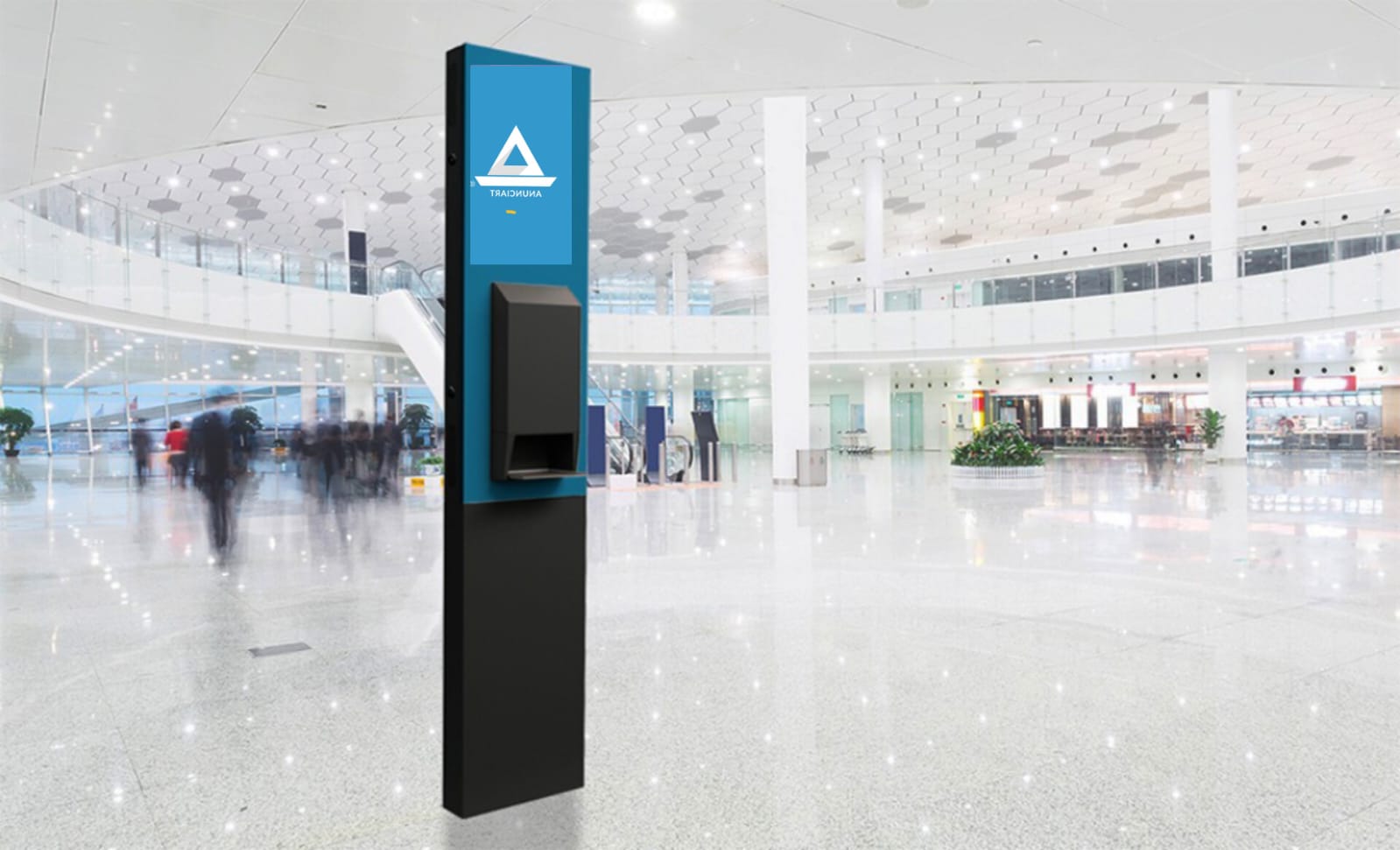
These advertisements have been displayed on bus shelters, screens, and billboards, demonstrating that LED lights are a powerful medium that attracts airport users, as they can actively interact with the brand.
In some cases, this option is touch-based and has proven to be one of the most profitable options available, as it allows users to have direct contact with the brand, making it their own.
When consumers feel so positive about a brand's advertising, it positions itself at the top of their minds, creating a neuro need that can lead to a purchase in the short or medium term.
Another advantage is that, being in a location that is closely monitored and observed by the authorities, the screens are practically risk-free, as well as being in a strategic position to be seen by all users present at the airport.
Airport advertising is a surefire success for any brand or product, since, among many other things, segmentation occurs automatically. Being in a specific city or country provides clues as to where this product may be found.
Similarly, the advertised product in question is very likely to be purchased, because users at the airport are in a state of excitement or elation, which can lead to a purchase, as it has been psychologically proven that purchases are more likely to occur in such circumstances.