
How are sales leads generated and deals closed in companies? You have probably heard of Outbound Digital Marketing, a traditional strategy that has been the cornerstone of marketing for decades, although this has changed over the years.
Inbound has gained a lot of momentum.
Today, this has gained much popularity and strength as one of the most effective strategies, focusing on the customer through valuable content, personalizing experiences, and taking advantage of today's digital platforms.
Through this, companies can attract potential customers naturally, without interruptions, focusing on creating long-term relationships with customers, rather than just closing a sale.
With the evolution of technology and changes in consumer behavior, this can be achieved through Digital Inbound Marketing.
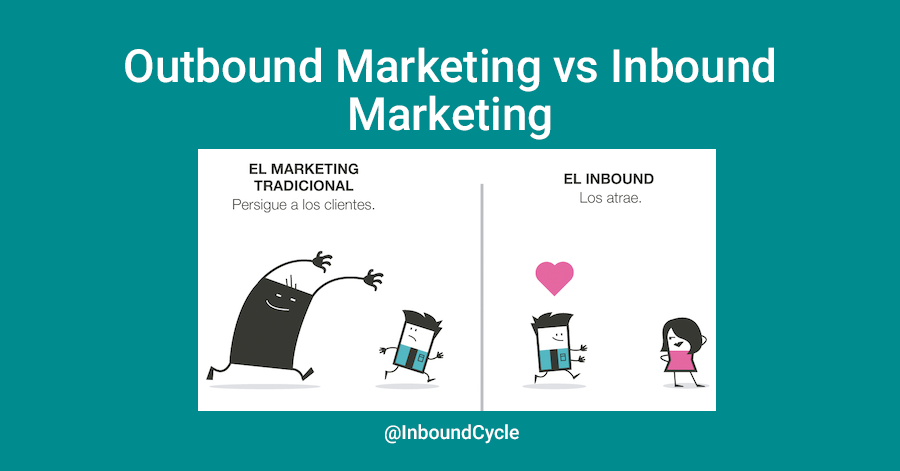
Differences between Inbound and Outbound
Inbound refers to all actions that seek to generate interest in a brand by creating content that appeals to customers.
On the other hand, Outbound is a more traditional method that seeks to convey a message to customers in a much more direct way.
Outbound is an active practice in which companies target potential buyers.
Inbound Advantages and Disadvantages
Advantages:
Attracting interested potential customers: By creating relevant and useful content, you attract potential customers who are actively seeking information related to the product or service you offer.
Cost-effective: Content marketing and SEO can generate long-term leads, costing relatively little compared to traditional marketing techniques.
Relationship building: They provide valuable content that can establish trust and credibility with the audience, which can lead to lasting relationships with customers.
Disadvantages:
Time: Inbound marketing can take time to see significant results. This involves gradually building an audience with a strong online presence.
Competition: With the growth of content marketing, the online space can be saturated, making it difficult to stand out from the crowd.
Difficulty measuring ROI: It can be challenging to directly attribute conversions to inbound marketing activities, making it difficult to evaluate return on investment.
Outbound Advantages and Disadvantages
Advantages:
Quick results: Outbound marketing tactics such as paid ads and email campaigns can generate quick results in terms of lead generation and sales.
Control over the audience with this can specifically reach selected audience segments through demographic segmentation and targeting.
More direct ROI measurement: It is easier to measure return on investment with outbound marketing, as conversions are usually more directly attributable to marketing activities.
Differences between the two
Inbound marketing: what type of audience is it aimed at?
Inbound marketing is primarily aimed at an audience seeking relevant information and solutions to problems. This strategy focuses on attracting potential customers by creating high-quality, useful content that responds to their diverse needs and questions.
Outbound marketing targets a broader, more general audience. It uses more traditional marketing techniques such as mass media advertising, direct mail, or cold calling to reach a wider audience and generate interest in the products or services offered.
Benefits of Inbound:
It offers a number of significant benefits for companies that implement it, such as generating high-quality leads that focus on attracting potential customers who are genuinely interested in the products or services they offer, providing better quality leads.
Cost-Effectiveness:
Compared to traditional marketing, inbound tends to be more cost-effective in the long run, as creating and distributing relevant content can be less expensive than traditional advertising methods.
Improved branding and reputation:
Providing valuable and useful content helps establish the company as an authority in its industry and builds customer trust and loyalty.
Greater reach and visibility:
Inbound marketing allows companies to reach a wider audience through various digital channels, increasing brand visibility and market reach.
Long-term relationships:
By providing relevant and personalized content throughout the customer journey, inbound marketing helps build lasting relationships with customers, which can lead to repeat sales. Inbound marketing is not just about getting leads.
Inbound Marketing
Types of companies that benefit most from Inbound
Those that benefit most are usually those that offer products or services that require more considered and consultative purchasing processes, including high-end, technology, educational, and healthcare products or services, among others. Companies seeking to build long-term relationships with their customers and establish themselves as authorities can reap great benefits from Inbound.
Inbound and Outbound Channels:
Just as there are different uses and functions for each of the strategies, there are also ideal channels for implementing them. Here are a few.
Outbound:
- Phone calls
- In-person or virtual events
- Urban advertising
- Pamphlets and brochures
- Radio and television
Inbound:
This seeks to make information and content available to consumers without forcing them to receive the message, implying that consumers have the freedom to access it through more open communications.
The ideal channels for this are:
- Websites
- Social media
- Newsletters
- Video platform
- News centers
Inbound marketing aims to capitalize on customers' natural interest in a specific topic to offer them exactly what they are looking for.
Outbound marketing begins with market research, which aims to identify ideal consumers to whom a product can be offered.
https://anunciart.com/nutrisa-tiene-nuevos-vasos-coleccionables-de-bob-esponja/