L'Oreal is working closely with artificial intelligence on bio-printed skin that can "feel." In its AI marketing laboratory called CreAItech, this "skin" is similar to human skin and allows cosmetics to be tested without the need for animals. It can also be replicated in different skin types, including conditions such as eczema and acne.
They also aim to go further, as they are seeking to integrate sensors into the bio-printed skin to obtain sensory feedback.
L'Oreal is making progress in the development of synthetic skin that, according to the French company, could one day "feel like human skin."
During last week's Viva Technology conference in Paris, L'Oreal showcased its "bioprinting" technology, a technique that enables 3D printing of skin with characteristics similar to human skin.
Thanks to Artificial Intelligence, animal testing is a thing of the past.
Guive Balooch, director of L'Oreal's technology incubator, explained that bioprinting is the "ability to use 3D printing in conjunction with biology to create customized skin, tailored to a fully inclusive range of real reconstructed skin."
In this way, experiments and animal cruelty were abandoned at L'Oreal. Balooch said that this technology allows L'Oreal to replicate various human skin types, including conditions such as eczema and acne, as well as the ability to tan and heal from injuries.
What is the bioprinting that L'Oreal is experimenting with like?
L'Oreal is working in collaboration with startups and research institutions to improve its bioprinting technology, with the goal of developing synthetic skin that can "feel."
The company seeks to integrate sensors into the bio-printed skin that allow for sensory feedback, which would facilitate not only the evaluation of product effectiveness, but also the user's sensory experience.
"We will have sensors that will allow us to perform tests on reconstructed skin and obtain realistic sensory feedback, evaluating both efficacy and sensory experience," said the researcher, according to CNBC.
In addition to bioprinting, L'Oreal is also investing in artificial intelligence (AI) to revolutionize the user experience.
At the same technology fair in France, the company presented "BeautyGenius," an AI-powered beauty assistant that analyzes the user's face to identify their facial features and recommend products suitable for their skin.
Artificial intelligence assists L'Oreal marketing
L'Oreal also showcased its AI marketing lab, called CreAItech, which offers tools to create AI-generated marketing content that complies with brand standards.
The company is implementing AI-assisted marketing across its 37 beauty brands, including Kiehl’s, Lancôme, Giorgio Armani Beauty, and Yves Saint Laurent Beauté.
The integration of AI into marketing and cosmetics not only improves the accuracy and personalization of product recommendations, but also allows L'Oreal to maintain a competitive advantage in an ever-evolving market.
The ability to offer products and services based on accurate data and analysis is becoming a key differentiator in the beauty industry.
Following this first bombshell in the beauty products industry, animal testing is expected to be phased out, as it is considered unnecessary cruelty and more and more consumers of these products are speaking out against such tests.
On the other hand, the new products presented demonstrate L'Oréal's expertise in leveraging data, technology, and artificial intelligence (AI) to better inform consumers and give them access to personalized products.
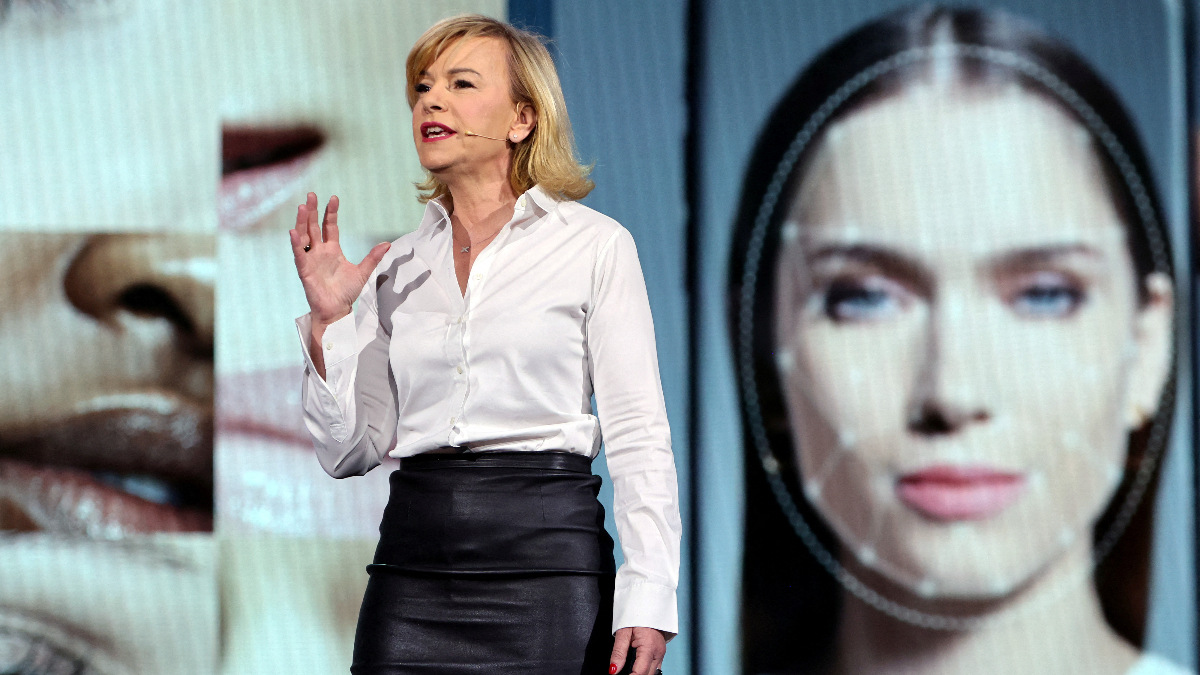
Artificial Intelligence used by L'Oréal