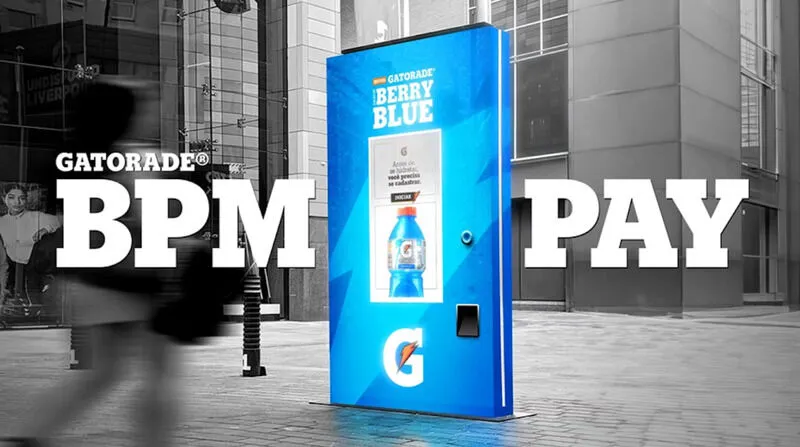
Gatorade, the sports drink created under the wing of PepsiCo, has launched an innovative outdoor campaign on Avenida Paulista in São Paulo (Brazil).
It is an interactive panel called 'BPM Pay' that measures heart rate and promotes hydration among 'urban athletes', according to brand statements. It also offers participants Gatorade's new Berry Blue flavor to ensure proper hydration during or after training.
Those walking along Paulista Avenue can participate by registering directly on the panel and reading their heart rate.
Promotes movement and exercise among residents
The initiative seeks to promote interaction among local exercisers, while reinforcing 'Sua Que Dá', a Portuguese concept that emphasizes the message that sweat helps us go further.
"We are excited to bring this hydration experience to urban athletes, especially runners, who frequent Paulista Avenue. We want to encourage exercise and ensure that everyone has access to adequate hydration for optimal performance," said Jorge Natteri, head of marketing for Gatorade in Brazil.
The action takes place at strategic times throughout the day: from 7 to 9 a.m., from 12 to 2 p.m., and from 7 to 9 p.m. On weekdays and weekends, the operating hours will be extended from 7 a.m. to 7 p.m.
The media concept and implementation are the work of The Bakery agency, in collaboration with Eletromídia.
Gatorade
It is known to be an extremely useful drink for improving recovery.
https://www.youtube.com/watch?v=9WK-X6-lUqI
https://anunciart.com/las-zapatillas-walk-the-talk-y-el-nuevo-spot-digital-de-saye/
History of Gatorade
Gatorade, the world's best-selling isotonic drink, was born in 1965 when the coach of the University of Florida football team (Florida Gators) asked a renowned researcher at the university (Dr. R. Cade) why his players lost so much weight during games and hardly urinated afterwards.
The team of doctors and chemists, led by Professor Cade, demonstrated that when players sweated, disturbances in the body's chemical balance occurred (loss of electrolytes, sodium, chloride, and potassium) and devised a drink to compensate for this.
The drink soon became well known, especially when the team won the national college football championship for the first time in its history in 1967.
That same year, one of Dr. Cade's collaborators got a job at Indiana University, where he contacted one of the people responsible for university patents at the Indianapolis-based Stokely-Van Camp Co. Interested in patenting and marketing the product, the company guaranteed the rights of Cade and his colleagues as inventors in exchange for substantial royalties.
As was to be expected, especially given the tremendous commercial success that the drink began to enjoy throughout the US, the University of Florida initiated a series of legal actions against the company and its researchers.
This dispute lasted five years, until an agreement was reached between both parties, known as the Gatorade Trust, which recognized each party's economic rights to the income generated by the patent.
Since then, the University of Florida has received more than $100 million for the Gatorade rights.
Gatorade logos