
In the world of marketing and advertising, a frequently repeated story is that a simple change in the color of the buy button increased sales by 21%.
Colors not only embellish our designs, but also influence our decisions and emotions. For example, blue generates trust and professionalism, making it a frequent choice for brands. Red, on the other hand, arouses passion and energy, seeking to capture immediate attention to drive quick purchases. Each color conveys a subtle but powerful message.
The most commonly used colors and their impact on consumer perception.
Yellow: Optimism and youthfulness, quickly captures attention.
Orange: Creativity and adventure, ideal for vibrant and energetic brands.
Purple: Wisdom and luxury, for premium products or services.
Colors can be your allies in creating a unique and memorable brand identity. A well-chosen palette not only improves brand recognition by 80%, but also directly affects consumer perception of your company's personality.
The study of color and its impact on the human mind is an essential tool.
Colors not only create visual beauty, but also elicit specific emotional and psychological responses. As painter Wassily Kandinsky said, "Color is a power that directly influences the soul."
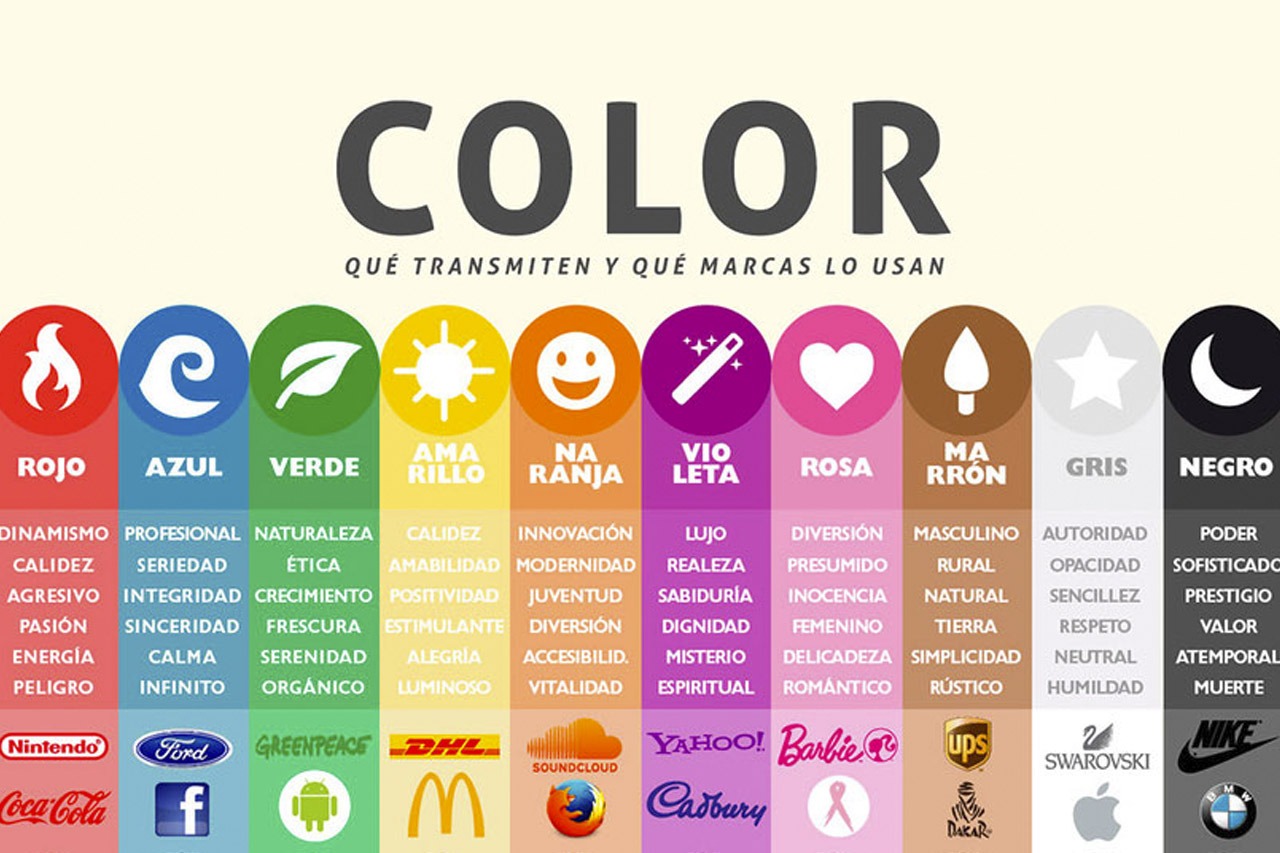
Colors
Here are some of the meanings of colors in advertising:
Yellow: Joy, Optimism, and Caution
•It attracts attention and creates a feeling of happiness.
Green: Nature, Health, and Growth
•Associated with ecological and healthy
Orange: Creativity, Energy, and Action
•Used in youth branding and entertainment.
Black: Luxury, sophistication, and authority
•Represents exclusivity and elegance
White: Purity, Minimalism, and Technology
•Conveys simplicity and transparency.
Purple: Creativity, Spirituality, and Luxury
•Associated with royalty and exclusivity.
Pink: Femininity, Sweetness, and Youth
•Represents tenderness and closeness.
Colors are an important part of advertising and sales.
Advertising is a powerful tool that companies use to capture the public's attention and persuade them to buy their products or services.
Behind every advertisement there is careful planning based on principles of psychology and the strategic use of colors that influence consumers' emotions and behaviors.
The psychology of advertising is the study of how advertising messages impact the minds of consumers.
Marketing and advertising professionals have discovered that understanding how people think and feel is essential to creating effective advertisements.
This is where color psychology in advertising comes into play, using tactics and techniques to influence consumer behavior.
One of the key concepts in advertising psychology ispersuasion. Advertisers try to persuade consumers by claiming that their products are the best and that they satisfy consumers' needs and desires.
To achieve this, they use various strategies, from employing celebrities to appealing to emotions. This is where colors come into play.